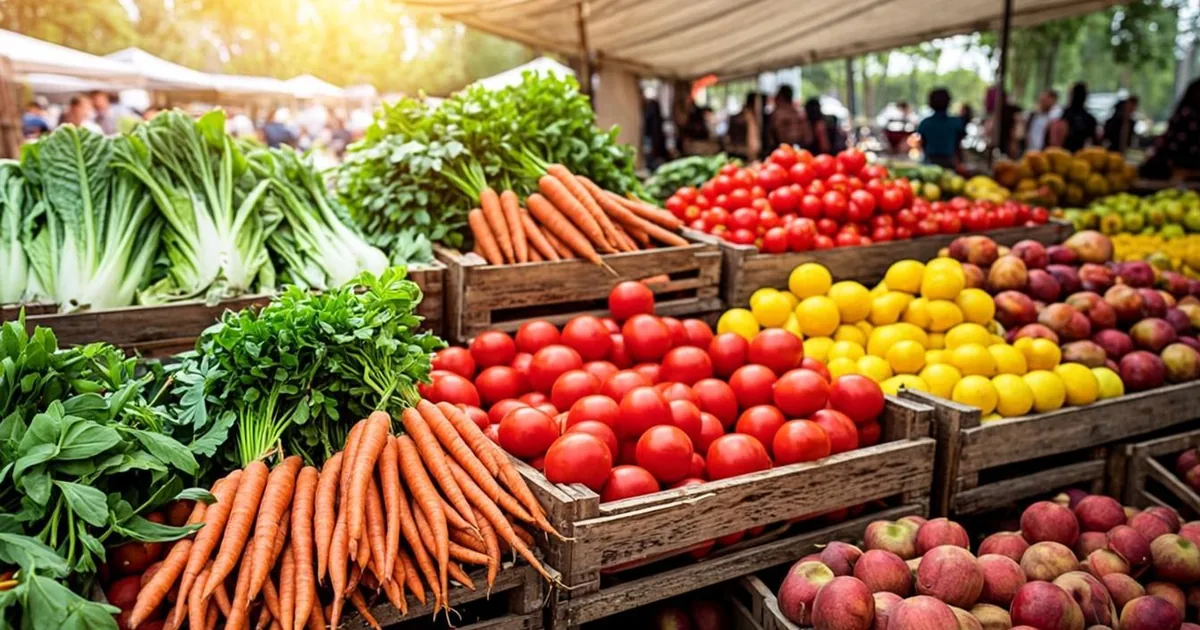
Shopping at SNAP farmers markets turns your monthly benefits into the freshest food available anywhere. Thousands of markets accept EBT, and matching programs like Double Up double your produce power.
Your EBT card buys fresh fruits, vegetables, herbs, and food-bearing plants directly from local growers.
Estimate Your Exact Monthly SNAP Allotment
Federal tables provide standard amounts, but your actual benefit depends on your shelter, utility, and medical deductions.
Open Free Food Stamp Calculator →This guide explains exactly how market shopping works and how Double Up matching adds free produce dollars. It also shows where to find participating markets near you during every season of the year.
Shopping at farmers markets also stretches your benefits much further than most families ever expect.
Yes, Farmers Markets Take EBT Cards
Most larger markets with multiple vendors run a central EBT terminal at their info desk. You swipe your card there, request a dollar amount, and get wooden tokens or paper vouchers.
Spend those tokens with any vendor selling eligible foods, just like spending ordinary paper cash. Vendors treat tokens exactly like money, and many markets let unused tokens roll over to next week.
Some larger markets now also carry wireless card readers directly at person vendor stalls instead. Either way, the whole experience feels similar to shopping at any ordinary grocery store checkout.
Everything Your Benefits Buy at Market Stalls
Federal eligible-foods rules apply at markets too, with a few pleasant surprises waiting for gardeners.
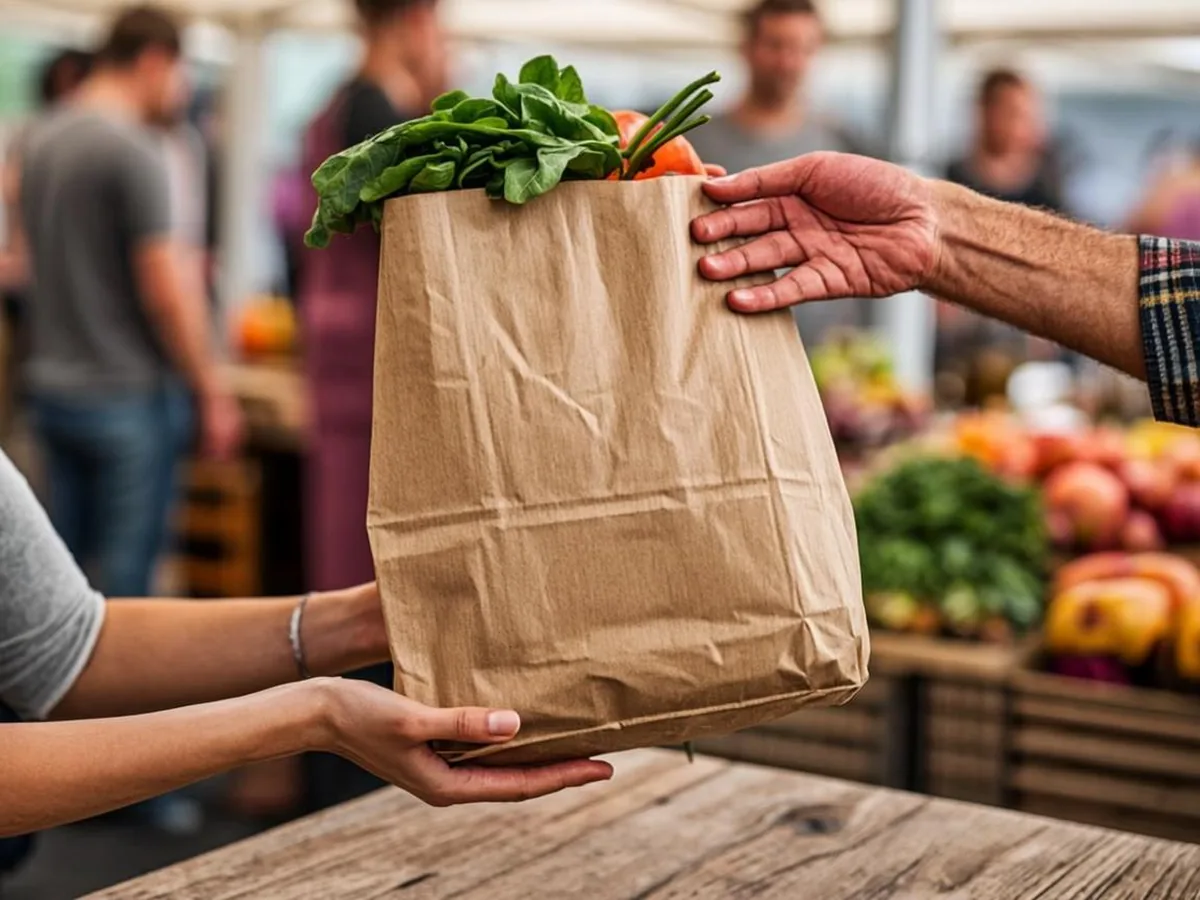
- Fresh fruits, vegetables, culinary herbs, mushrooms, and fresh-cut culinary flowers for cooking.
- Breads, baked goods, honey, maple syrup, jams, and preserves made by market vendors.
- Eggs, cheese, meat, poultry, and fish from licensed market vendors everywhere.
- Seeds and plants that produce food at home, like tomato starts and herb seedlings.
Our in-depth guide to buying seeds and plants with EBT explains that whole garden rule deeply. Just a few dollars of seedlings can produce vegetables worth fifty times their original cost.
Items Market Vendors Sell That SNAP Cannot Touch
Markets also sell crafts, cut flowers, soaps, and hot prepared foods that federal rules exclude. Cut flower bouquets, decorative wreaths, and ornamental plants all fail the federal eligible-foods test fully.
Hot ready-to-eat meals at market food stalls always need separate payment, matching the supermarket rules. Our complete guide to EBT hot food rules covers all the details that apply everywhere.
Vendors know the rules well, so ask them when you feel unsure about any item. Most vendors simply ring ineligible items as a fully separate sale on another payment method.
Double Up Food Bucks: Free Produce Matching
Double Up Food Bucks programs match your SNAP spending dollar for dollar at participating markets. Spend ten dollars of benefits, and the program adds ten dollars of free produce vouchers.
Daily match caps vary by location, commonly running somewhere between twenty and fifty dollars daily. The matched dollars buy fresh fruits and vegetables only, which complements your normal benefit spending.
The Fair Food Network started Double Up in Michigan, and it now operates in many states. Ask at the market info desk whether any matching program operates there on that day.
Senior Farm Share Boxes and Community Supported Agriculture
Community Supported Agriculture subscriptions, usually called CSAs, sometimes accept SNAP payments using flexible payment plans. A weekly CSA box delivers one farm's harvest directly to a convenient pickup point nearby.
Some CSAs offer SNAP-friendly installment billing, sliding scale shares, or shares subsidized by local donors. So ask the farms directly, because payment flexibility never appears on their websites very consistently.
Senior farmers market box programs operate in many counties through the local Area Agencies on Aging. These monthly boxes combine locally grown produce with convenient pickup arrangements designed for older adults.
Combining a CSA share with market matching stretches every benefit dollar across one entire growing season. Households that cook regularly always get the most value from all those weekly box quantities.
A Real Market Trip, Dollar by Dollar
Picture a Saturday morning where a family of four arrives with forty dollars of monthly benefits. They swipe at the info desk and get forty full dollars in wooden market tokens.
The Double Up desk then matches that amount with another forty dollars of fresh produce vouchers. Their effective total spending power for the morning now adds up to eighty full dollars.
They buy fresh tomatoes, greens, peppers, eggs, a loaf of bread, and six seedlings for spring. Those seedlings cost six dollars and eventually produce fresh peppers all summer long at home.
Other Matching Programs Worth Knowing
Many regions run locally funded matching programs under other different names, like California's Market Match. California's Market Match, Georgia Fresh for Less, and similar programs all work the same way.
Churches, hospital systems, and food banks all sponsor matching dollars in hundreds of communities nationwide. Every single matching program effectively doubles the produce power sitting inside your monthly benefit amount.
Households getting the maximum allotment of $1,841 monthly gain the most absolute dollars from matching. Our maximum allotments guide shows every one of the benefit amounts for every household size.
WIC and Senior Farmers Market Nutrition Programs
Two separate federal programs give WIC families and seniors extra farmers market vouchers each season. The WIC Farmers Market Nutrition Program and the Senior FMNP both issue seasonal coupon booklets.
Ask your local WIC office or Area Agency on Aging about their seasonal enrollment windows. Those extra vouchers stack alongside your SNAP spending, which makes summer market trips especially productive.
Finding Participating Markets Near You
The USDA officially maintains a national farmers market directory that clearly flags all SNAP-accepting market locations. Search by your zip code first, then call the market manager to confirm current year participation.
State health departments and Double Up program websites also keep updated participating market lists posted. Local food banks also publish market guides, which often include all the matching program details.
Market seasons peak from late spring straight through early fall across most of the country. Winter markets now operate in many states, especially those with strong greenhouse and storage-crop traditions.
Market Shopping Tips That Stretch Benefits
Shopping late in the market day often brings successfully negotiated bulk discounts from most vendors. Vendors always prefer selling out fully over packing leftovers, so end-of-day deals reward flexible shoppers.
- Ask about seconds, which are cosmetically imperfect produce sold at steep discounts.
- Buy by the bag, box, or bushel when vendors offer bulk pricing tiers.
- Plan meals around what peaks each season, because peak produce costs the least.
- Freeze, can, or preserve surplus produce, since those skills stretch benefits into winter.
Turning Market Surplus Into Winter Food
End-of-season produce deals pair beautifully with the basic preservation skills that any household can learn. Simple freezing needs nothing but bags and a freezer, and it preserves peak-season nutrition perfectly.
Simple water-bath canning easily handles tomatoes, pickles, and jams with just inexpensive starter equipment kits. Many cooperative extension offices teach canning classes free, and some loan equipment to first-time preservers.
A household that preserves August produce eats cheap, healthy food straight through the whole winter. That single habit turns one season of benefits into a full year of real grocery savings.
Bringing Kids to the Market
Farmers markets teach children exactly where food actually comes from, better than any classroom lesson. Kids who pick out their own produce consistently eat more vegetables at home afterward too.
Give each child a small shopping job, like choosing one vegetable or counting out tokens. Many markets also run kids' activity tables, tasting stations, and scavenger hunts during busy market hours.
SNAP at Farmers Markets: Common Questions
These are the questions that market shoppers ask most, answered with the current program rules.
More Market Questions, Answered
A few more common questions come up every season, so here are their direct answers.
A Quick Market Day Checklist
This one final checklist makes your very first market trip smooth and fully stress-free today.
- Bring your EBT card, a reusable shopping bag, and a small cooler for greens.
- Check the market's hours and token desk location on its website before leaving.
- Carry a small amount of cash for hot foods, crafts, and any parking fees.
- Walk the whole market once before buying anything, and then compare vendor prices.
- Ask about matching programs first, because the vouchers usually run out by late morning.
Households that follow this simple checklist consistently report better prices and much calmer shopping trips. Just ten minutes of preparation turns a chaotic first visit into a pleasant weekly routine.
Related SNAP Guides Worth Reading
The Bottom Line
SNAP benefits and local farmers markets truly fit together beautifully, especially wherever matching programs operate nearby. Swipe at the info desk, claim every match dollar, and enjoy the season's freshest food.
Your neighbors who grow your food appreciate every dollar, and your dinner table honestly tastes the difference. One simple market trip each week quietly upgrades the whole household's eating for the entire season.