Knowing your SNAP EBT payment schedule helps you plan grocery runs and monthly budgets with confidence. Every state deposits benefits on fixed dates that depend on your case number, last name, or Social Security number.
This guide explains how the SNAP payment schedule works and when funds hit your EBT card. You will also learn how to confirm your exact deposit date.
Most deposits land at midnight, weekends and holidays never delay them, and your date stays identical every month. That predictability makes budgeting far easier once you know your own schedule.
What Is the SNAP EBT Payment Schedule?
The SNAP EBT payment schedule is your state's system for deciding when monthly benefits load onto your EBT card. Instead of paying everyone on one day, states spread deposits across the month.
This staggered approach keeps checkout lines shorter and shelves stocked. Stores would otherwise face a single overwhelming shopping rush and run low on inventory.
Your specific date follows your state's formula. Most states use the last digit of your case number. Others check your last name's first letter or digits of your Social Security number.
The useful part is that your date rarely moves. Once you learn it, you can plan grocery trips around it for as long as you stay certified.
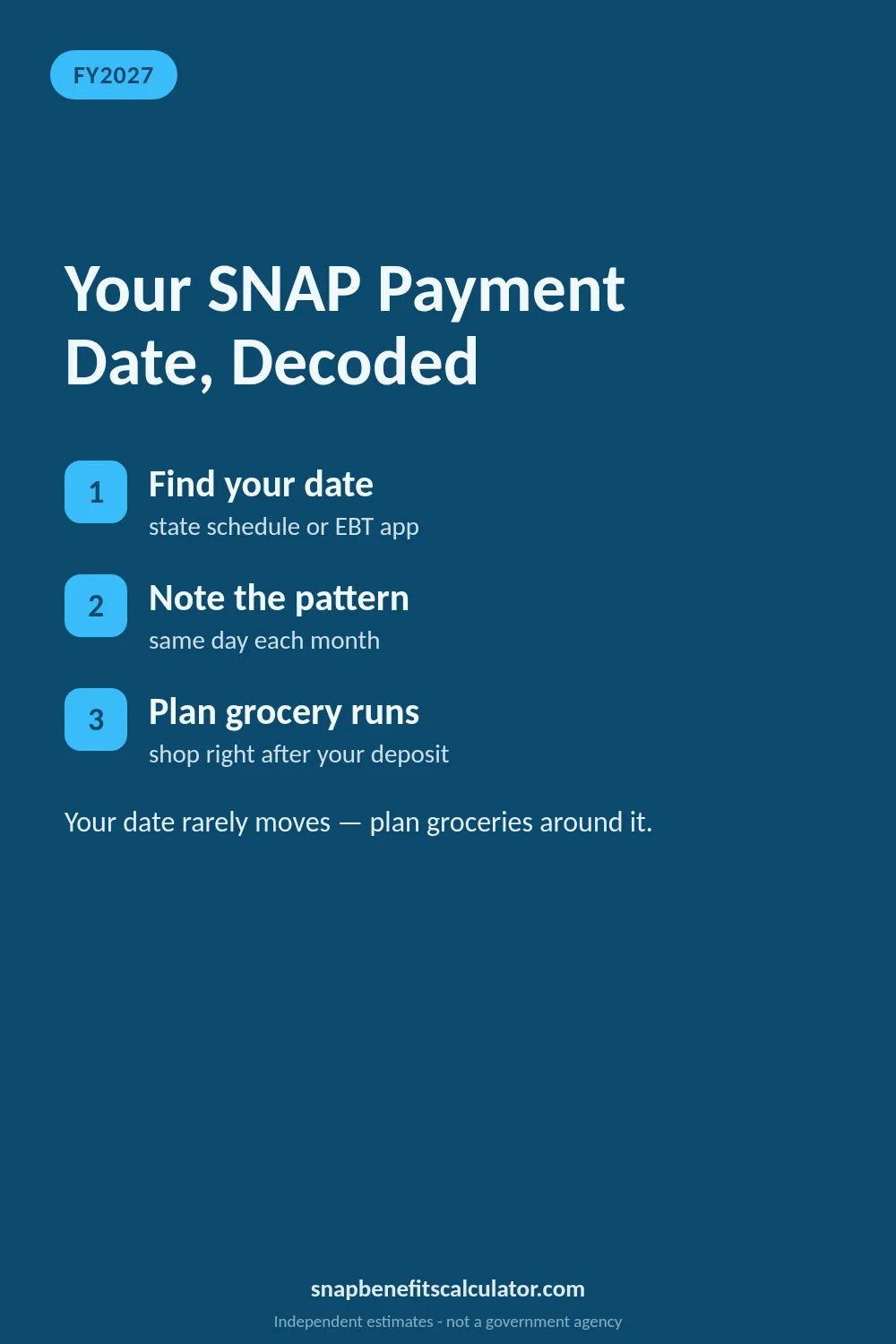
Two common methods states use to assign SNAP payment dates.
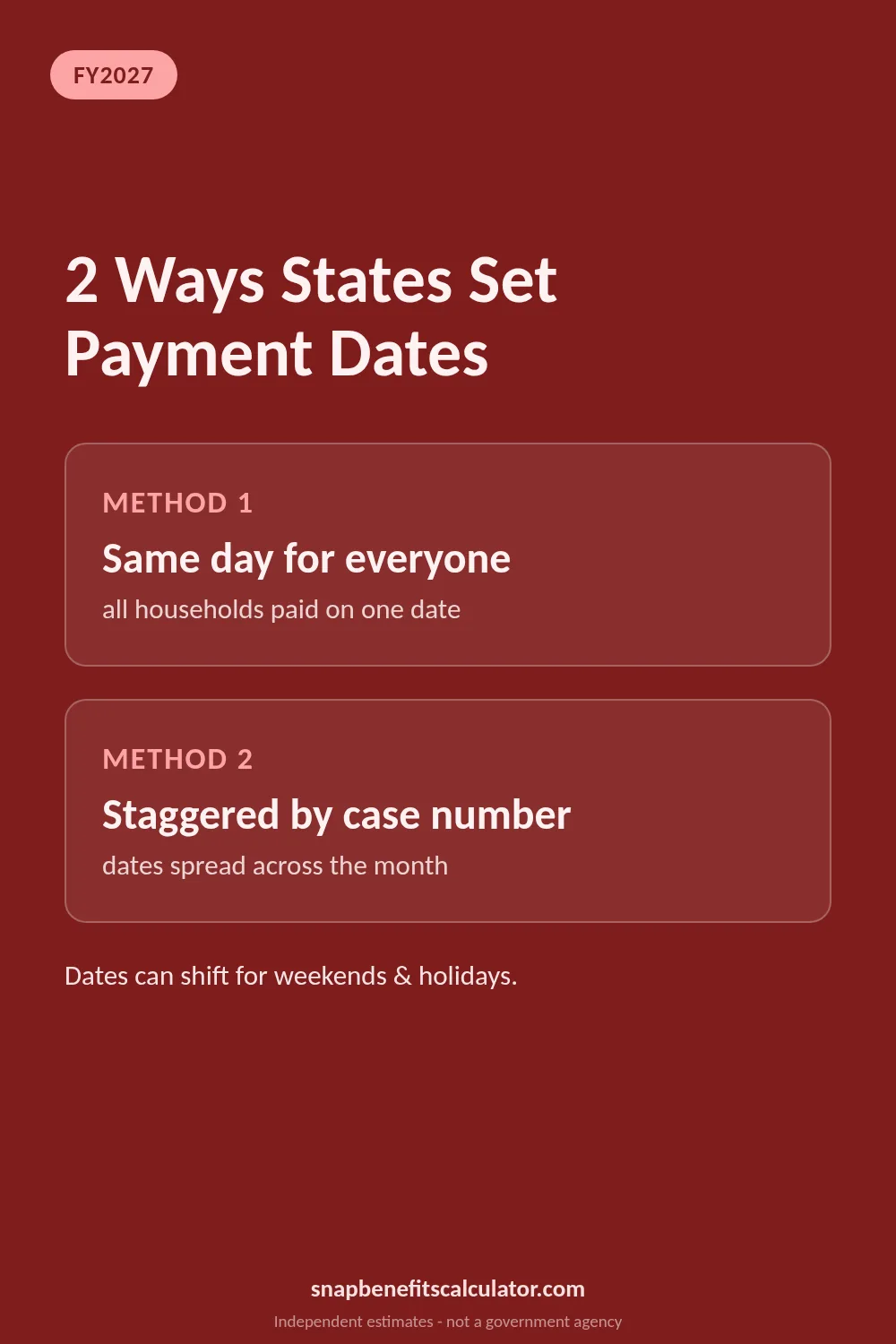
How SNAP Payment Dates Are Determined
States use three main methods to assign payment dates. Knowing which one your state follows tells you how to work out your own day.
Method 1: Case Number (Most Common)
Most states use the last digit of your case number to set the payment date. If your case number ends in 3, your deposit typically lands on the 3rd of each month.
Some states use two digits instead. A case number ending in 23 could mean benefits on the 23rd, which spreads deposits evenly across the whole month.
You can find your case number on any approval letter or notice from your SNAP office. It also appears when you log into your state's benefits portal.
Method 2: Last Name (Some States)
A few states assign dates using the first letter of your last name. Arizona works this way, spreading deposits from the 1st through the 13th based on the opening letter of your surname.
Grouping by last name divides caseloads into alphabetical blocks. Each block gets its own slice of the deposit calendar, which keeps daily volumes manageable.
Method 3: Social Security Number (Several States)
Several states key deposits to digits from your Social Security number. Massachusetts uses the last SSN digit across the 1st-14th. Nebraska keys SSN digits to the 1st-5th, and Oregon follows the same approach across the 1st-9th.
Because your SSN never changes, this method locks in your deposit day permanently. Check your state agency's chart to map your digits to a date.
When Do SNAP Benefits Load on Your EBT Card?
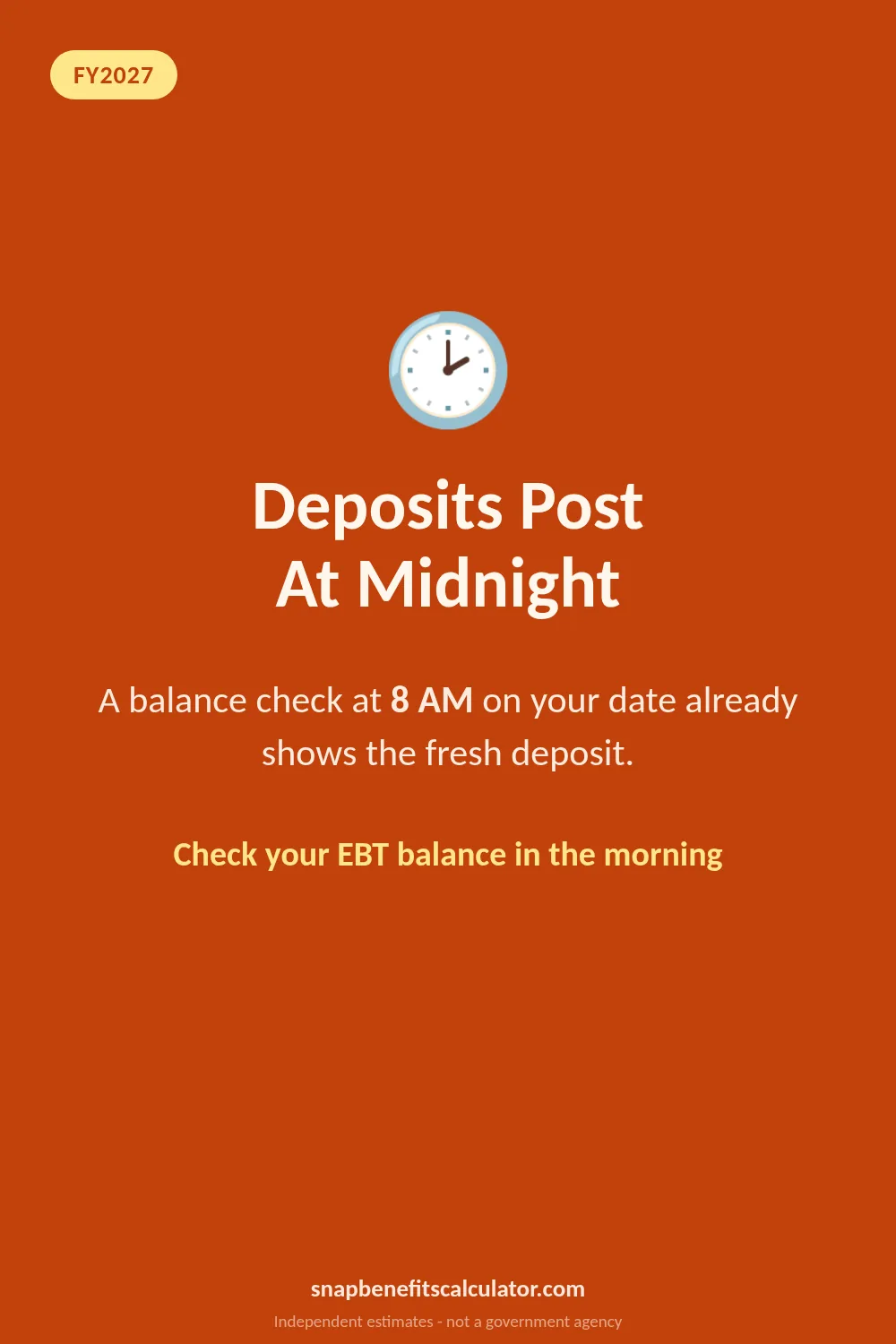
In most states, benefits load at midnight on your assigned date, so funds are ready the moment the day starts. A few states post deposits early in the morning instead.
If nothing shows at midnight, check again after 6 AM before worrying. Posting windows differ slightly between state EBT vendors.
The deposit itself is automatic. Nothing needs to be requested or triggered, and the funds appear on the card without any action from you.
Weekends and holidays never push the date back. The EBT system runs around the clock, every day of the year, including federal holidays.
Deposit timing also differs from balance checks. Your card shows the new funds the morning after a midnight posting. A balance check at 8 AM on your date already reflects the fresh deposit.
Sample payment schedules for major states. Check with your state for exact dates.
SNAP Payment Schedule by State (2026)
Each state publishes its own deposit calendar, and the differences between them are big. The table below shows verified 2026 windows for the largest programs. Sources include state agency pages and our own state guides.
| State | Deposit Window | What Sets Your Day |
|---|---|---|
| California | 1st-10th | Last digit of case number |
| Texas | 16th-28th | Last two digits of EDG number |
| Florida | 1st-28th | 9th and 8th digits of case number |
| New York | 1st-9th | Last digit of case number (NYC differs, see below) |
| Pennsylvania | 3rd-14th | First 10 business days, keyed to case number |
| Illinois | 1st-10th | Last digit of case number |
| Ohio | 2nd-20th | Last digit of case number |
| Michigan | 3rd-21st | Last digit of case number |
| Georgia | 5th-23rd | Last two digits of client ID |
| North Carolina | 3rd-21st | Last digit of SSN |
| Massachusetts | 1st-14th | Last digit of SSN |
| Arizona | 1st-13th | First letter of last name |
| Washington | 1st-20th | Last digit of case number |
| New Jersey | 1st-5th | Seventh digit of case number |
| Virginia | 1st-7th | Last digit of case number |
| Wisconsin | 2nd-15th | Keyed to your case details |
| Minnesota | 4th-13th | Last digit of case number |
| Nebraska | 1st-5th | Digits of your Social Security number |
| Oregon | 1st-9th | Last digit of SSN |
| Colorado | 1st-10th | Keyed to your case details |
New York City deserves a special note. The city spreads postings over 13 days across the first two weeks, skipping Sundays and holidays. Printed calendars help there, while upstate follows the simple 1st-9th case-number rule.
Notice the three broad patterns in the table. Several states finish all deposits inside the first 10 days. A second group stretches into mid-month, and states like Texas and Florida pay across three-plus weeks.
For any state not listed, your local SNAP office publishes the full chart online. Our state guides for all 50 states also cover deposit timing alongside eligibility rules.
How to Check Your SNAP Payment Date
You can confirm your exact date through several reliable channels. Start with the one that is easiest for you.
Check Your Approval Letter
Your approval letter from the state agency usually states the payment date or explains how it is calculated. Keep that letter handy, because it is the most authoritative record of your schedule.
Call the EBT Customer Service Line
Every state runs an EBT customer service number, printed on the back of your card. The automated balance line usually announces your next deposit date along with your current balance.
Use Your State's Online Portal
Most states show your payment schedule inside their benefits portal once you log in. Common examples include:
- California: BenefitsCal.com
- Texas: YourTexasBenefits.com
- Florida: MyACCESS (myflfamilies.com)
- New York: myBenefits.ny.gov
- Illinois: ABE.illinois.gov
Download the EBT Mobile App
State EBT apps show your balance, transaction history, and upcoming deposit dates in one place. Search your phone's app store for your state's official app, and confirm the publisher before installing.
Key information about your EBT card and how to protect it.
What to Do If Your SNAP Benefits Don't Load
Sometimes a deposit looks late or missing, and searching "are EBT payments late this month" becomes tempting. Before assuming the worst, work through these four checks in order.
Step 1: Wait 24 Hours
Posting times vary by a few hours between state vendors. Give it until the next morning before taking any further action.
Step 2: Check Your Balance
Call the customer service line or open the mobile app and confirm the actual balance. Deposits sometimes land without any notification on your phone.
Step 3: Verify Your Recertification Date
Missed recertification deadlines stop benefits entirely. Check your paperwork, and if a deadline slipped, submit the required forms right away. Our guide on how SNAP eligibility is determined explains the recertification cycle in detail.
Step 4: Contact Your Local SNAP Office
If the deposit is still missing after 24 hours and your certification is current, call your local office. Keep your case number ready so the caseworker can pull your file quickly.
Do SNAP Benefits Load on Holidays and Weekends?
Yes, and this surprises many shoppers. The EBT system operates around the clock, every day of the year. A Saturday or Thanksgiving deposit still lands right on schedule.
If your EBT date falls on a Saturday or Sunday, your benefits load that same day at the usual time. No shift, no delay, and no extra waiting until Monday.
Bank holidays also make no difference to deposits, because EBT runs on its own network rather than the banking system. The only holiday headache is that SNAP offices stay closed, so hold non-urgent calls for the next business day.
First-Time SNAP Benefits — When Will They Load?
Newly approved households often get their first deposit on a different rhythm than the monthly schedule. Here is what to expect in each situation.
Standard Approval (30-Day Processing)
Households approved within the standard 30-day timeline usually see the first deposit within about 72 hours of approval. After that first payment, your case settles into the normal monthly schedule.
Expedited Approval (7-Day or Faster)
Crisis-qualified households receive expedited service, so the first deposit arrives within seven days of applying, sometimes the same day. Federal rules require states to screen every application for these emergency criteria.
Retroactive Benefits
If processing delays pushed your approval past the deadline, the state owes benefits for the missed period. Those retroactive amounts arrive as one lump sum, separate from your regular monthly deposit.
Does Recertification Change Your Payment Date?
Most households keep the same deposit date after recertifying, because the case number stays attached to the case. Your date only moves when the state issues a new case number or rewrites its issuance formula.
A gap in benefits changes the picture. If your case closes and you reapply later, the state usually assigns a fresh case number. Your new deposit date may differ from the old one.
Your approval letter after recertification lists the current schedule. Read it once, note the date, and file it with your other SNAP paperwork.
How Much Will You Receive Each Month?
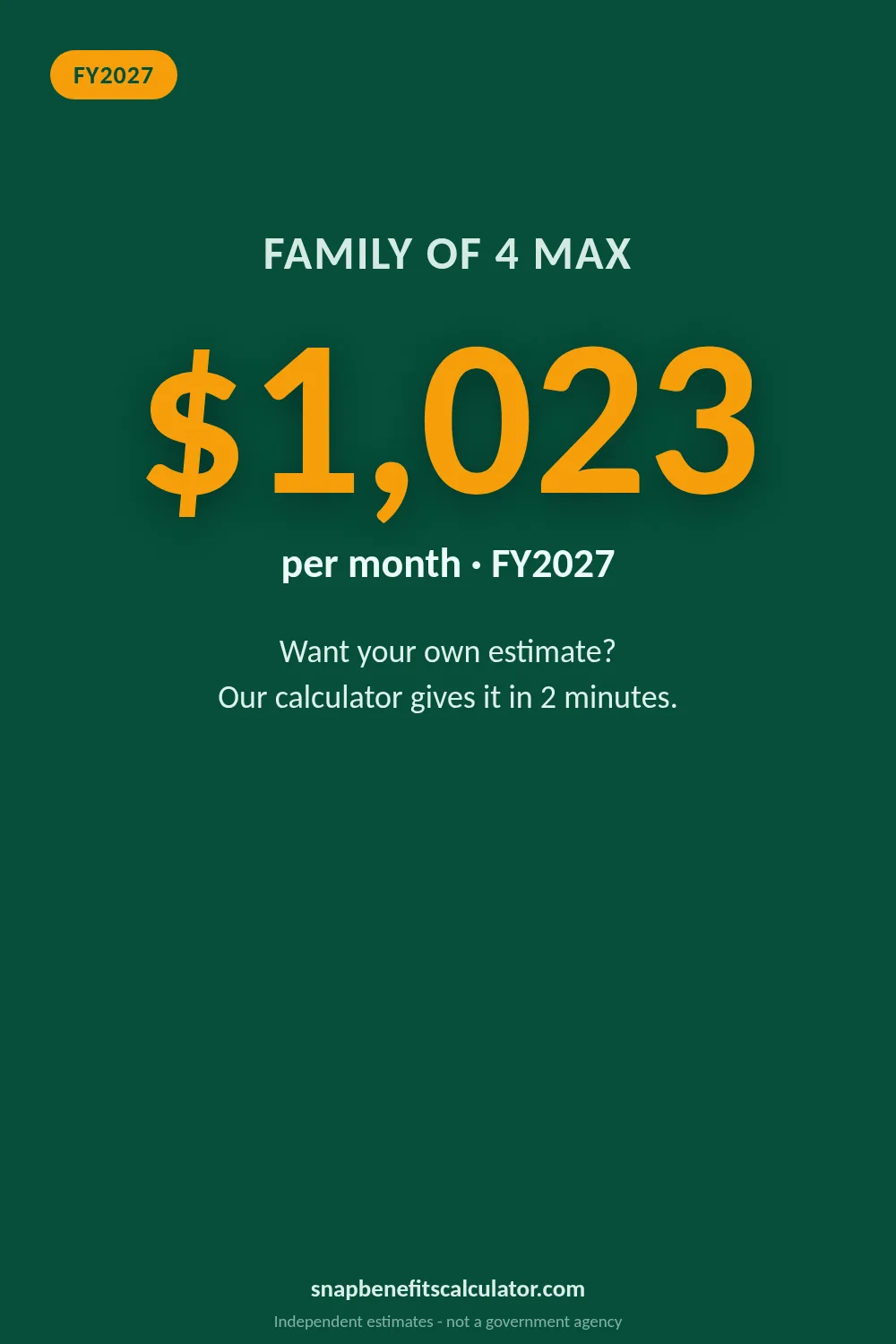
Your deposit amount depends on household size, income, and deductions. The maximum monthly allotments for federal fiscal year 2027, effective October 1, 2026 through September 30, 2027, are:
| Household Size | Max Monthly Benefit (FY2027) |
|---|---|
| 1 person | $306 |
| 2 people | $562 |
| 3 people | $808 |
| 4 people | $1,023 |
| 5 people | $1,217 |
| 6 people | $1,463 |
| 7 people | $1,616 |
| 8 people | $1,841 |
| Each additional member | +$225 |
One and two-person households receive at least $25 per month. Most families earn less than the maximum because countable income reduces the award. The USDA Food and Nutrition Service publishes the full FY2027 tables if you want the source data.
These figures reset every October when the USDA applies its annual cost-of-living adjustment. Check back each fall, because the maximums rarely stay identical two years running.
Want your own estimate? Use our SNAP Benefit Calculator to see your likely monthly amount in about two minutes.
Six practical tips for making the most of your SNAP benefits.
Tips for Managing Your SNAP Benefits
Getting the most out of your SNAP benefits takes a little planning. These proven strategies help households stretch the monthly deposit further.
Track Your Balance Regularly
Know your remaining balance before every shopping trip. The mobile app and the customer service line both work, and both are free around the clock.
Plan Your Shopping Around Your Payment Date
Schedule your big grocery run one or two days after benefits load. Shelves are fully stocked right after deposit days, and the rest of the month becomes smaller top-up trips.
Take Advantage of Farmers Market Programs
Many farmers markets double SNAP dollars through programs like Double Up Food Bucks. A $10 SNAP purchase can become $20 in fresh produce at participating stalls.
Buy Staple Items in Bulk
Rice, beans, pasta, and frozen vegetables last for weeks and cut per-meal costs sharply. Pair bulk staples with smaller fresh purchases so nothing spoils.
Keep Receipts for Budget Tracking
Every EBT receipt prints your remaining balance. Save them for a month and the spending pattern becomes obvious, which makes adjustments easy.
Report Changes Promptly
Income changes, household size changes, and moves all need reporting within 10 days. Late reports can create overpayments that you would have to pay back later.
Common Questions About SNAP Payment Schedules
Do SNAP benefits load at midnight?
In most states, yes. Benefits load at midnight on your scheduled date, though some states post early in the morning instead. If nothing shows at midnight, check again after 6 AM.
Can my payment date change?
Your payment date follows your state's formula and rarely changes. A new case number or a state system update can shift it. Your agency will notify you before any change takes effect.
What if my payment date falls on a holiday?
Benefits still load on holidays. The EBT system operates 24/7, including weekends and federal holidays. Your deposit will appear on your scheduled date regardless of the calendar.
Do benefits roll over if I don't use them?
Yes. Unused benefits remain on your EBT card for 12 months. A card left unused for 365 straight days can be expunged, so make a small purchase every few months.
Can I check my deposit date online?
Yes. Most state portals show your payment schedule after you log in. The EBT mobile app and the customer service number on your card work too.
What happens if I miss my recertification deadline?
Missing your recertification deadline stops benefits entirely. You would need to reapply and complete the full process again. Submit recertification paperwork early to avoid any gap in deposits.
Are SNAP benefits deposited on the same date in every state?
No. Every state sets its own calendar, and your day depends on your case number, last name, or SSN. The table above covers the windows for the largest state programs.
Can I use my EBT card in another state?
Yes. EBT cards work in all 50 states, and your benefits still load on your home state's schedule while you travel. Only your home state's deposit dates apply.
Important Reminders About Your SNAP Payment Schedule
Key Takeaways
- Your payment date is fixed — it doesn't change month to month
- Benefits load at midnight (or early morning) on your scheduled date
- Weekends and holidays don't affect deposit timing
- Unused benefits roll over for up to 12 months
- Report income or household changes within 10 days
- Keep your recertification date in mind to avoid benefit interruptions
State-Specific SNAP Payment Resources
For the most accurate information about your payment schedule, contact your state's SNAP office directly. These quick links cover five of the largest programs.
Related SNAP Guides
Deposit timing is only one piece of the puzzle. These guides cover the rest of the system, from qualification rules to stretching your award.
- How SNAP eligibility is determined — the three-step income and resource test behind every approval
- FY2027 SNAP deduction amounts — every deduction that lowers your countable income
- SNAP minimum benefit rules — why one and two-person households never drop below $25
- How TANF works alongside SNAP — cash assistance rules and how the two programs interact
- Why your SNAP benefit is lower than the maximum — the math that shrinks the standard award
- Florida SNAP income limits — DCF thresholds and Florida deposit-day details
- Who gets $1,000 a month in Pennsylvania SNAP — a worked household example with real numbers
Conclusion — Plan Ahead with Your SNAP Payment Schedule
Understanding your SNAP EBT payment schedule turns a waiting game into a plan. Once you know the date, you can schedule grocery runs and meal prep around it. The deposit arrives like clockwork from there.
The formula is simple to decode. Your state picks the method, and your case number, last name, or SSN digits pick the day. Deposits land at midnight or early morning and work every single day of the year.
If your date ever seems unclear, your approval letter and state portal settle it in minutes. And when a deposit genuinely runs late, the four-step troubleshooting plan above tells you exactly where to call.
Need to Check Your SNAP Eligibility?
Use our free calculator to estimate your monthly benefits in 2 minutes.
Calculate My Benefits →Protecting Your EBT Card and Benefits
Your EBT card holds real money, so it deserves the same care as a debit card. These security habits stop the most common ways benefits get stolen.
Keep Your PIN Private
Never share your four-digit PIN with anyone, including store employees or relatives. Memorize it rather than writing it down, and change it immediately if you suspect someone learned it.
Beware of EBT Skimming
Skimming devices copy card data when you swipe, so inspect card readers before inserting yours. Loose attachments or unusual overlays are warning signs — report them to the store manager and your state EBT office.
Report Lost or Stolen Cards Immediately
Call your state's EBT customer service line the moment a card goes missing. The agent freezes the old card and mails a replacement, which typically arrives within 5-7 business days.
Monitor Your Transaction History
Review transactions weekly through the app or portal and flag any purchase you did not make. Most states handle disputes within a 90-day window, so quick reporting protects your money.
What Can You Buy with SNAP Benefits?
Knowing exactly what SNAP covers makes shopping lists easier to build. The two categories below cover nearly every question shoppers ask.
Allowed Purchases
- Fresh, frozen, and canned fruits and vegetables
- Meat, poultry, fish, and seafood
- Dairy products — milk, cheese, yogurt, eggs
- Bread, cereal, rice, and pasta
- Snack foods — chips, cookies, crackers
- Non-alcoholic beverages — juice, soda, coffee, tea
- Seeds and plants that produce food
- Bottled water and ice for household use
Not Allowed
- Beer, wine, and liquor
- Tobacco products and cigarettes
- Vitamins and supplements
- Hot prepared foods for immediate consumption
- Pet food and animal supplies
- Paper products — toilet paper, napkins
- Cleaning supplies and household items
- Cosmetics and personal hygiene products
A few states also run the Restaurant Meals Program. It lets seniors, disabled recipients, and people experiencing homelessness buy approved restaurant meals. Availability varies, so ask your state agency whether your area participates.
Seasonal Considerations for SNAP Benefits
Your benefit amount and deposit date work the same all year, but seasons change shopping strategy. A few small adjustments keep the household fed without stress.
Summer Months
Produce peaks in summer, and market matching programs like Double Up Food Bucks stretch fruit and vegetable budgets. Remember that school meals pause during break. Some states issue separate Summer EBT for school-age children to fill that gap.
Winter Months
Frozen and canned vegetables carry the budget when fresh prices climb. Heating bills also squeeze winter budgets, and if you receive LIHEAP, the standard utility allowance may raise your SNAP deduction.
Holiday Season
Thanksgiving and Christmas meals cost more, so set aside a slice of each deposit from October onward. Food banks also run holiday meal programs that do not touch your SNAP balance at all.
Monthly SNAP Budgeting Strategy
A simple weekly rhythm keeps benefits lasting the full month. This four-week plan matches how most successful households manage their deposits.
Week 1: Major Shopping Trip
Right after benefits load, buy the heavy staples — rice, beans, pasta, frozen proteins, and pantry goods. Add fresh produce for the first week and plan meals around store sales.
Week 2: Fresh Restock
Make a smaller trip for milk, bread, eggs, fruits, and vegetables. A quick pantry check before leaving prevents buying duplicates.
Week 3: Mid-Month Check-In
Check your EBT balance and compare it to your plan. If spending is running ahead, lean on pantry staples and cheaper protein cuts for the next several days.
Week 4: Stretch Remaining Benefits
The last week favors soups, stews, and casseroles that use up what you already own. If you truly run short, a local food bank can bridge the gap without affecting your benefits.
More Questions About SNAP Payment Schedules
If my EBT date falls on a Saturday, when do I get paid?
You get paid that same Saturday at the usual time. EBT deposits never shift to the next business day, because posting happens automatically.
Are EBT payments late this month?
Regular monthly deposits almost never run late, so check your balance first and confirm your certification is active. If your state announced a mass schedule change, your agency will post the updated dates on its website.
Can I get my benefits early if I have an emergency?
No. Benefits are deposited on a fixed schedule and cannot be moved up. For an immediate food emergency, contact a local food bank or call 211 for help in your area.
What if I move to a different state?
Moving states means closing your current SNAP case and reapplying where you live now. Your payment date will follow the new state's schedule. Using the old state's benefits after a move counts as fraud.
Do I get extra benefits during holidays?
No. SNAP pays a fixed monthly amount set by your household size and income. Budget for bigger holiday meals out of your regular deposits.
Can someone else shop with my EBT card?
Yes — you can name an authorized representative to shop for you. That person uses your card and PIN, but every purchase stays your responsibility.
What happens to my benefits if I don't use my card for months?
If your EBT card sits unused for 365 consecutive days, the balance may be expunged. One small purchase every few months keeps the account active.
Are SNAP payment schedules the same for all household members?
Yes. Everyone in the same SNAP household shares one case number and one payment date. Benefits load as a single deposit for the whole household.