
"Oklahoma makes you jump through hoops." The Oklahomans who say that are usually thinking of the DMV, not OKDHS. When it comes to food assistance, Oklahoma runs one of the simpler income tests in the country: a straight 130 percent gross income screen, no asset test at all, and a deposit schedule you can memorize in ten seconds. A family of three in Oklahoma City earning $2,400 a month clears the income screen with room to spare.
An Oklahoma food stamp calculator turns that screen into a dollar figure you can actually plan groceries around. You feed it your household size, your paychecks, and your bills; it applies the same sequence an Oklahoma Human Services caseworker applies, in the same order, using the FY2027 standards that took effect October 1, 2026. The whole run takes about two minutes.
This guide walks the full chain: the Oklahoma income table, the deductions that do the heavy lifting, two worked examples with the math shown line by line, and the 1st-through-10th deposit rhythm. Every figure uses FY2027 standards, current through September 30, 2027.
An Oklahoma SNAP calculator applies the 130% gross income screen, the standard and shelter deductions, and the FY2027 benefit formula to your household numbers. A three-person household earning $2,400 in gross monthly wages with heavy shelter costs lands near $527 a month on the Oklahoma EBT card, against an $808 maximum for that household size.
| Oklahoma SNAP Fact | FY2027 Detail |
|---|---|
| Administering agency | Oklahoma Human Services (OKDHS), statewide from Oklahoma City |
| Gross income limit (most households) | 130% FPL — $1,729 single / $3,575 family of four |
| Asset test | None — savings, vehicles, and bank balances are not counted |
| Max monthly benefit (FY2027) | $306 – $1,841 (+$225 per additional member) |
| Minimum benefit (1-2 people) | $25/month |
| Deposit schedule | 1st–10th, by the last digit of your case number |
| Apply online | OKDHSLive (oklahoma.gov) or the OKDHS app |
| EBT card help | 1-888-328-6551, 24 hours a day |
What the Oklahoma Calculator Measures Before the Benefit
Every SNAP estimate runs the same three-stage sequence, and Oklahoma adds none of the state-specific twists that trip people up elsewhere. The calculator first checks your gross income against the 130 percent screen, then works through the deductions, then applies the benefit formula. Skipping any stage is how bad estimates happen.
Gross income means everything before taxes: wages, self-employment after allowed business expenses, Social Security, child support you receive, unemployment, and work study for students. Oklahoma counts the money that arrives, not the money you wish arrived. A $2,000 paycheck counts as $2,000 gross, even though the deposit is smaller.
The second stage is where estimates get interesting, because deductions shrink the income SNAP actually holds against you. The calculator asks for your rent or mortgage, your utility bills, your childcare costs, and any out-of-pocket medical bills if someone in the house is over 60 or disabled. Each answer feeds a specific deduction, and the order never changes.
The final stage compares your countable income with the federal maximum allotment for your household size. The formula subtracts 30 percent of your net income from the maximum, which is why two families of the same size can get very different deposits. The calculator runs this math for you, but the sections below show every step by hand so you can check its work.
Oklahoma Income Limits for FY2027
Oklahoma holds most households to the federal baseline gross income test of 130 percent of poverty, with no BBCE expansion on top. Where the state parts ways with strict states is the asset rule: OKDHS applies no resource limit whatsoever, so a savings account or a paid-off car never disqualifies you on its own.
| Household size | Max gross monthly income (130% FPL) | Maximum monthly benefit |
|---|---|---|
| 1 person | $1,729 | $306 |
| 2 people | $2,345 | $562 |
| 3 people | $2,960 | $808 |
| 4 people | $3,575 | $1,023 |
| Each additional person | +$616 | +$225 |
Figures effective October 1, 2026 (FY2027). Source: USDA FY2027 allotment and income standards, as applied by OKDHS.
A household that includes a person aged 60 or over, or anyone receiving disability benefits, is measured on a separate track. OKDHS skips the 130 percent gross screen entirely for these households and holds them to the net income test only, and their shelter deduction is uncapped. Fixed-income seniors and disabled Oklahomans often fare better under this route because medical bills and high rent finally count at full value.
One boundary rule catches families off guard. When an elderly or disabled person lives with others but cannot purchase and prepare meals separately, OKDHS applies a 165 percent FPL gross standard to decide whether that person can qualify as a household of their own. That 165 percent standard is $2,195 a month for one person, $2,976 for two, and $3,757 for three, with higher limits for larger households under the same table.
The Deductions That Move an Oklahoma Estimate
Deductions are the difference between a disappointing estimate and a useful one, and Oklahoma uses the standard federal set with no state substitutions. The 20 percent earned income deduction comes first: every dollar you earn from work gets a one-fifth discount before anything else runs. A $2,000 paycheck counts as $1,600 at this stage, which rewards working households in a way flat benefit checks never do.
The standard deduction arrives next with no documentation needed. Households of one to three receive $217, four-person households $229, five-person $268, and six or more $308. It comes off automatically, so never skip it when checking the math by hand.
Dependent care costs come off dollar for dollar when the care lets you work, look for work, or attend school. Babysitting for a night shift, an after-school program, and licensed daycare all count, and Oklahoma does not cap the amount. Medical costs above $35 a month count the same way, but only for households with a member over 60 or disabled, so keep pharmacy receipts if that describes your home.
The shelter deduction handles the rest. Rent or mortgage plus court-ordered utilities get deducted above half of your adjusted income, up to a $769 cap for households without a senior or disabled member. OKDHS adds a standard utility amount to your shelter costs if you pay heating, cooling, or separately billed basic utilities, which pushes most renters past the cap immediately. Homeless households claim a flat $205.66 shelter deduction with no bills required.
Two Oklahoma Estimates, Worked Start to Finish
Example 1: Oklahoma City family of three
Maria works retail in Oklahoma City and brings home $2,400 a month in gross wages; she has two children, ages 4 and 9. The household passes the $2,960 gross screen for three people on the first check. The earned income deduction removes 20 percent, or $480, dropping countable income to $1,920, and the $217 standard deduction brings it to $1,703.
Her adjusted income now sits at $1,703. Maria pays $1,085 in rent plus separately billed electricity and winter gas, so her counted shelter costs sail past the $769 cap. Half of $1,703 is $851.50, and since the cap sits below that line, the full $769 shelter deduction applies. Net income lands at $934, and 30 percent of that is $280.20.
The benefit formula subtracts that figure from the $808 maximum for a family of three: $808 minus $280.20 equals $527.80, which rounds down to $527 a month. Her card loads between the 1st and the 10th depending on her case number, and the amount refreshes every month as long as she completes her interim reporting on time.
Example 2: Tulsa senior living alone
Earl is 72, retired, and receives $1,510 a month in Social Security. Because his household includes a member over 60, OKDHS skips the gross income screen and runs the net test only. The $217 standard deduction brings his count down to $1,293, and $150 of his out-of-pocket medical costs above the $35 threshold come off next, leaving $1,143 in adjusted income.
Earl pays $862 in rent plus separately billed utilities, and his counted shelter costs reach $1,090. Half of $1,143 is $571.50, so his excess shelter deduction is $1,090 minus $571.50, or $518.50, with no cap because of his age. Net income falls to $624.50, and 30 percent of that is $187.35.
The formula gives $306 minus $187.35, which rounds down to $118 a month. The lesson inside the numbers: without the senior track, the uncapped shelter deduction and the medical deduction would never appear, and Earl would likely have screened out at the 130 percent gross test outright.
When Your Oklahoma EBT Card Gets Funded
Oklahoma issues benefits across the first ten days of the month, keyed to the last digit of your SNAP case number. Your date stays the same every month once assigned, weekends and holidays included:
| Case number ends in | Benefits available |
|---|---|
| 0 – 3 | 1st of the month |
| 4 – 6 | 5th of the month |
| 7 – 9 | 10th of the month |
Deposits post at midnight and never move for weekends or holidays, so the 10th is the 10th whether it falls on a Tuesday or a Saturday. Unused benefits roll over month to month, and your case number appears on your approval letter if you are unsure of the last digit.
Oklahoma is also in the middle of swapping every old card for a new chip-enabled card. They arrive in plain white envelopes, benefits transfer automatically, and nothing changes at the register. Check your balance on the back-of-card phone line at 1-888-328-6551, on your last grocery receipt, or inside the OKDHS client portal.
Applying Through OKDHSLive Without the Runaround
OKDHSLive handles the entire application online: you create an account, answer the household and income questions, and upload documents straight from a phone camera. OKDHS administers the program statewide rather than through county offices, so the portal is the front door no matter where in Oklahoma you live. Paper applications still work, and the 1-888-328-6551 line routes you to a human if the online route stalls.
Line up five document groups before you start: photo ID, proof of Oklahoma address, the last 30 days of income (pay stubs or award letters), rent or mortgage proof, and utility bills. Seniors and disabled applicants should add pharmacy and medical receipts, since the medical deduction only pays when documented. Childcare receipts belong in the pile for any working parent.
OKDHS must decide a standard application within 30 days and an expedited case within seven. You qualify for expedited service if your household has less than $150 in gross monthly income and $100 or less in cash on hand, if your rent and utilities exceed your gross income, or if you are a destitute migrant farmworker household. Ask for expedited processing in writing on the application itself, because the flag does not always trigger automatically.
An eligibility interview follows, usually by phone. Answer the number, walk through your documents honestly, and keep copies of everything you submit. Approved benefits arrive backdated to your filing date, which is why the day you apply matters more than the day you finish gathering paperwork.
Three Oklahoma Errors Worth Avoiding
The first error is reporting utilities you do not actually pay. The utility allowance only stacks onto your shelter costs when you are billed for heating or cooling separately from rent, and claiming it without the bills invites an overpayment claim later. Renters whose heat is included in rent should say so plainly.
The second error is skipping the medical deduction. Oklahoma seniors routinely leave $100 to $300 a month of countable medical expenses undeclared because they assume copays are too small to matter. Everything above $35 a month counts, including transportation to medical appointments, dentures, and eyeglasses, and the deduction is uncapped on the senior track.
The third error is letting interim reporting lapse. Oklahoma cases close quietly when a required report goes unfiled, and a closed case means a new application, a new interview, and a fresh 30-day wait. Mark your reporting deadline on the same calendar as your deposit dates and treat it like a bill.
What Changed for Oklahoma Cases This Year
FY2027 lifted every ceiling Oklahomans care about. The maximum for a family of four climbed from $994 to $1,023, the single-person maximum rose from $298 to $306, and the minimum benefit for one- and two-person households moved from $24 to $25. Income screens moved too: the 130 percent gross test for one person now sits at $1,729, up from the prior year, and the four-person screen runs $3,575.
The 2025 federal benefits law continued to roll out as well. Able-bodied adults without dependents face wider work-rule requirements and shorter exemption windows than in prior years, and Oklahoma applies the federal time limits as written. Households affected by the work rules should ask OKDHS about the ABAWD calendar rather than assuming the old 36-month clock still applies.
Non-citizen eligibility narrowed in April 2026 under the same federal law. Asylees, refugees, and parolees lost SNAP access, while lawful permanent residents, Cuban-Haitian entrants, and COFA nationals kept it. Mixed-status households file for eligible members only, and OKDHS does not share application information with immigration enforcement.
Finally, the chip-card migration reached most Oklahoma caseloads this year. If your card still lacks the chip, keep using it until the replacement envelope arrives, and activate the new card the day it shows up so the benefits transfer completes without a gap.
Stretching the Oklahoma EBT Card Further
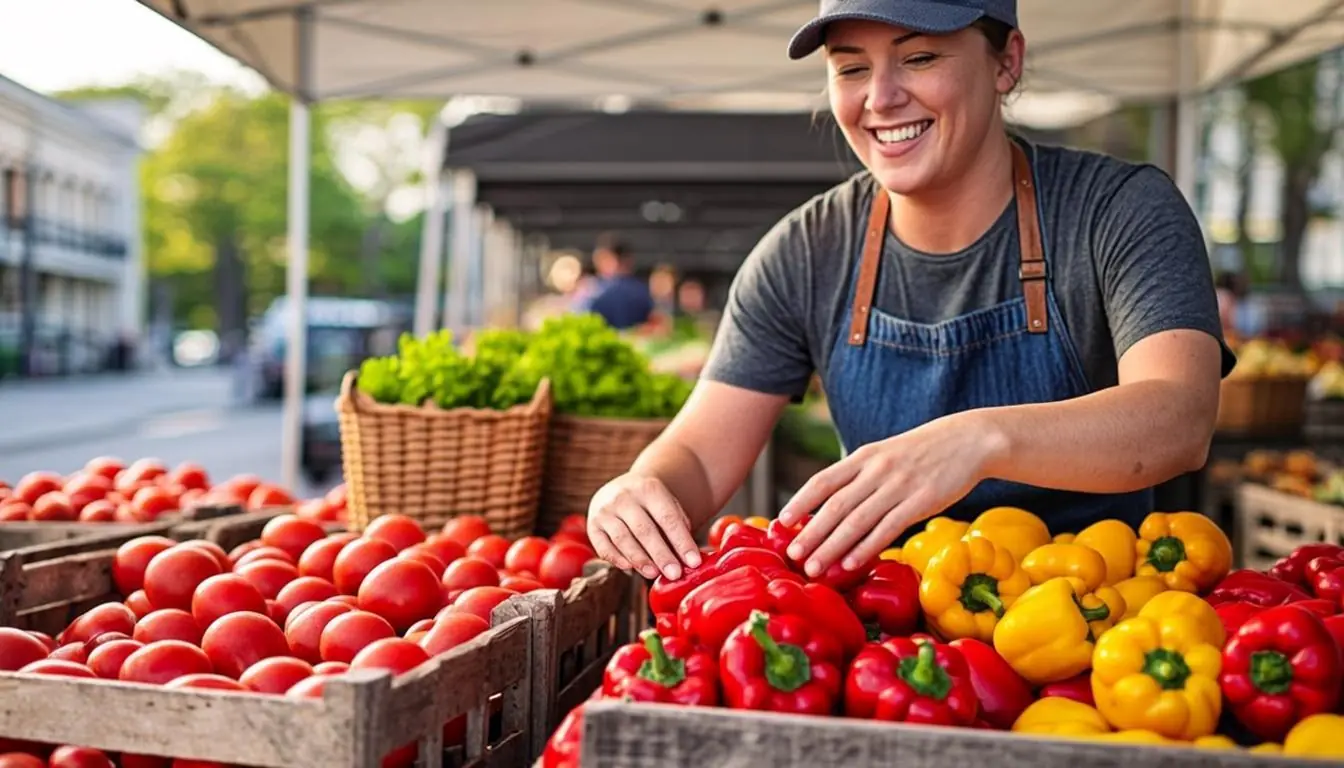
An Oklahoma deposit goes further when you stack the programs that sit on top of SNAP. Participating Oklahoma farmers markets double produce dollars through market-level matching programs, so a $10 EBT swipe can put $20 of fruits and vegetables in the bag. The Oklahoma University extension service runs free cooking and budgeting classes in most counties, and some markets add Double Up Food Bucks tokens at the welcome tent.
Online shopping changes the math for rural households. Major national grocers accept Oklahoma EBT for online orders, though delivery fees and tips still require a separate payment method. Warehouse pickup with no fee turns a $527 deposit into a full cart more often than a corner store run does.
Store brands, unit-price shelf tags, and the frozen aisle do the rest. Frozen produce carries the same nutrition at a third of the price of out-of-season fresh, and Oklahoma WIC families can layer WIC food packages underneath SNAP dollars rather than instead of them. The households that stretch benefits best treat the deposit as a monthly grocery budget, not a weekly one, and shop the first week with a list built around the store’s sales cycle.
Oklahoma SNAP Questions, Answered
These are the questions Oklahoma households type into search bars most often, answered with the FY2027 rules this page uses.
Still deciding whether your own numbers clear the bar? The SNAP benefits calculator runs the same FY2027 formula for any household size, and the Oklahoma SNAP state page keeps the agency contacts and state rules in one place. For the wider context, the FY2027 income limits by state chart shows where Oklahoma sits against the rest of the country, how SNAP deductions work explains the levers inside your estimate, and the recertification guide covers what to do when your six-month review approaches.